
Xiaomi Mobile
Scenario Introduction
Overview
Xiaomi social login allows users to log in to third-party applications or websites securely using Xiaomi as the identity source. Configure and enable Xiaomi social login in GenAuth to quickly obtain Xiaomi's basic open information and help users log in without passwords through GenAuth.
Application Scenario
Mobile
Terminal User Preview

Notes
- If you don't have a Xiaomi account yet, please go to Xiaomi Open Platform to register as a developer.
- If you have not opened a GenAuth console account, please go to GenAuth console to register a developer account
Step 1: Create a mobile/tablet application on Xiaomi
Log in to Xiaomi Open Platform and click Management Center: 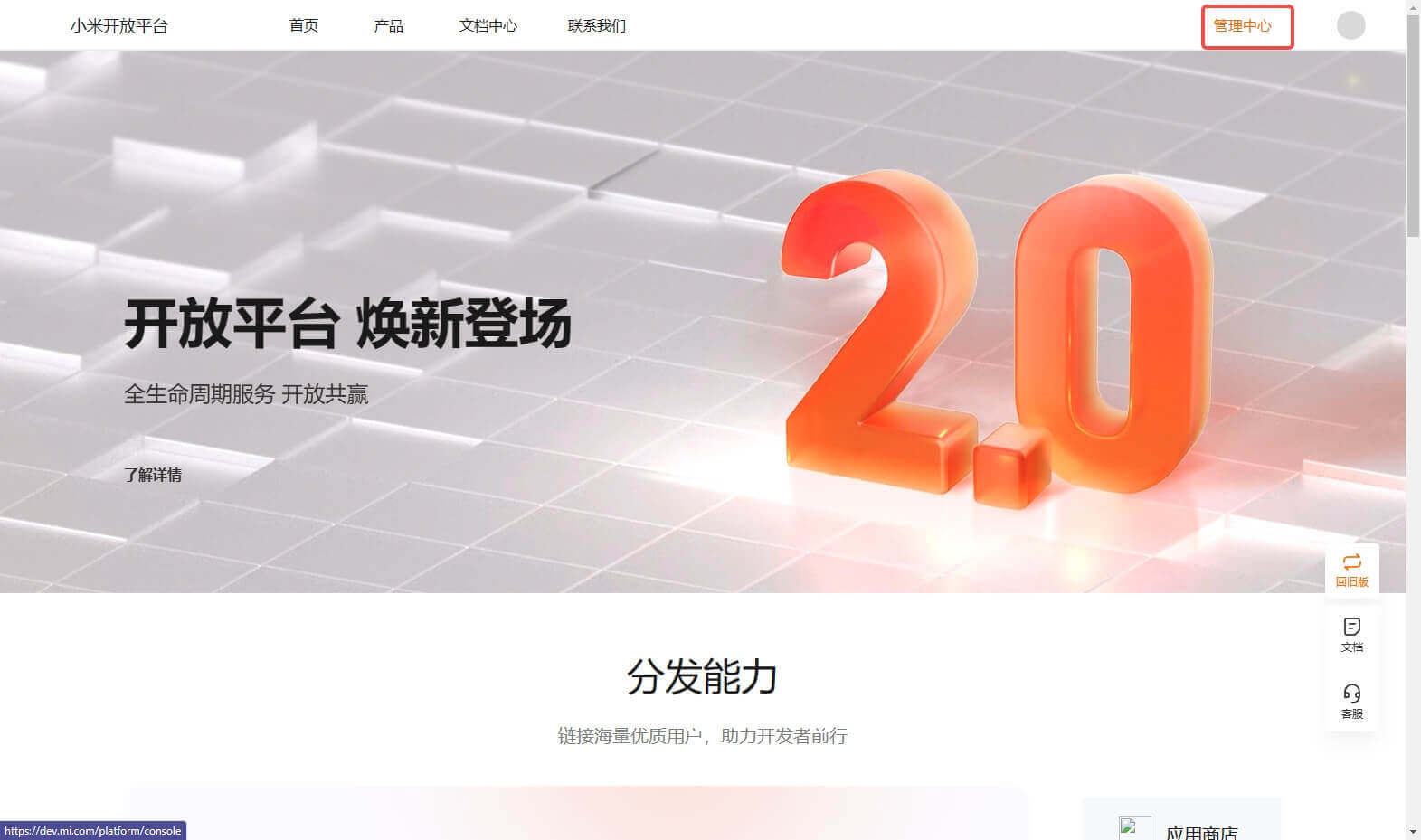
On the Management Center page, click Account Services: 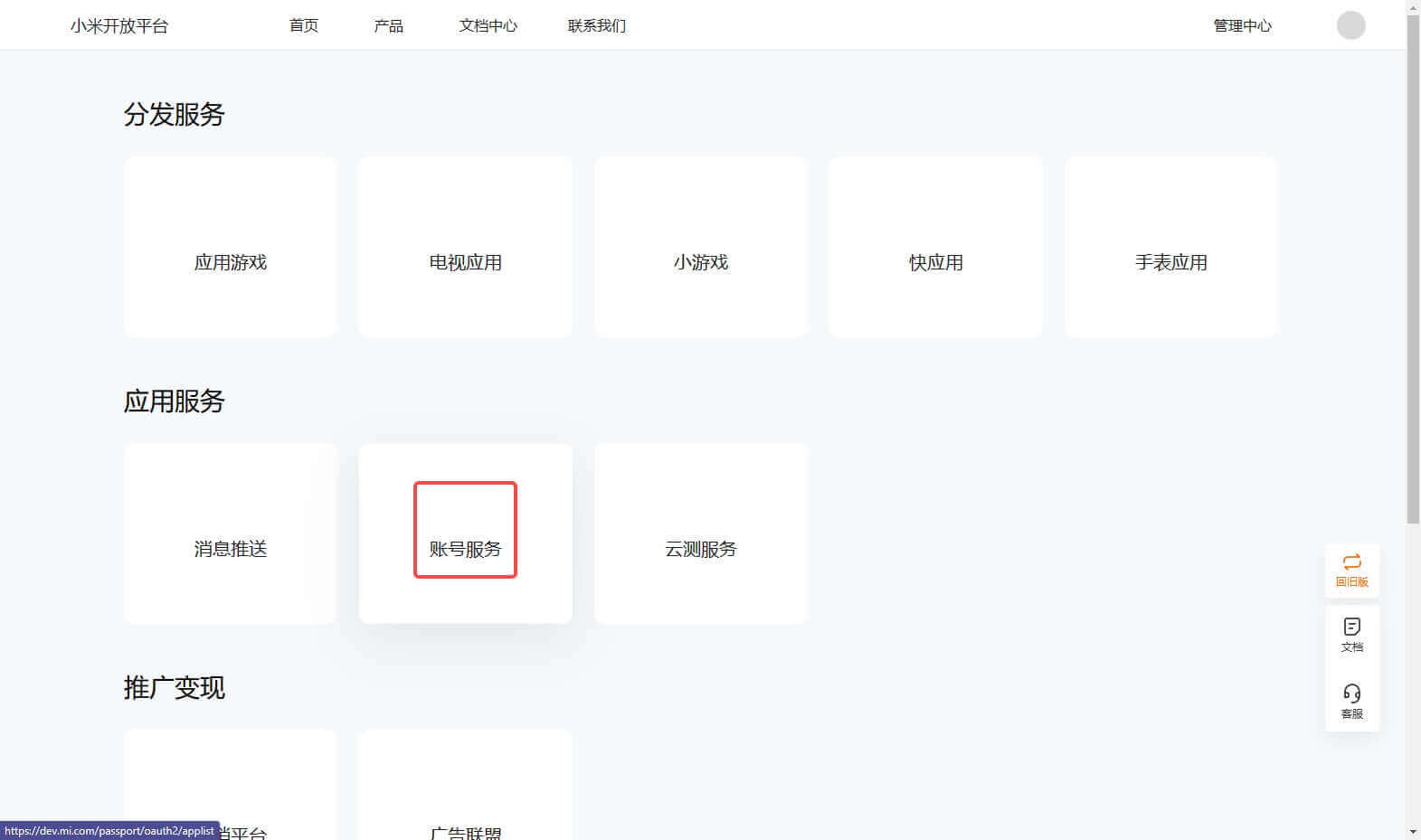
On the Account Services page, click Create a new application and select Mobile/Tablet Application: 
On the Create New Application page, fill in the application information and click Create: 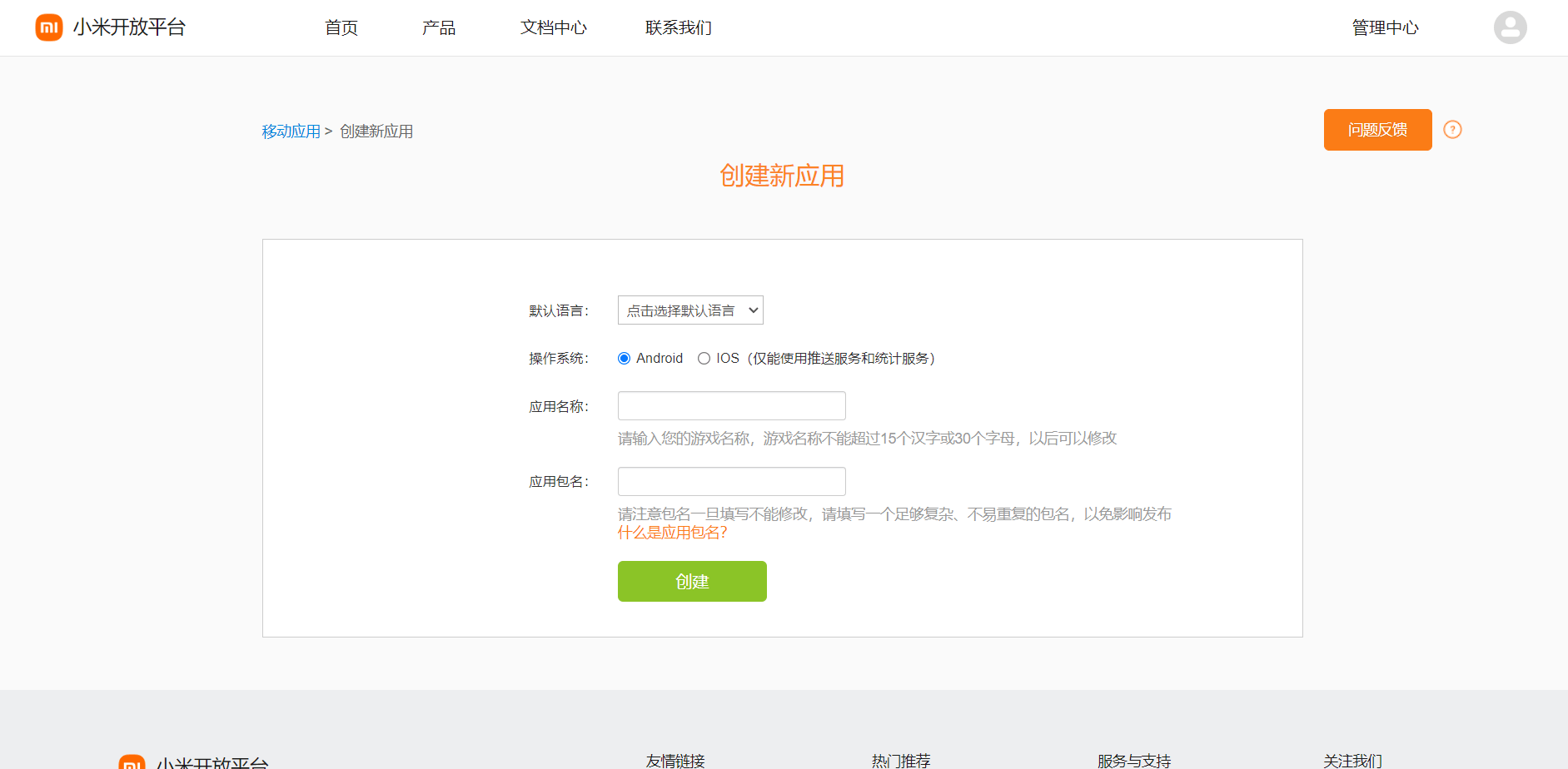
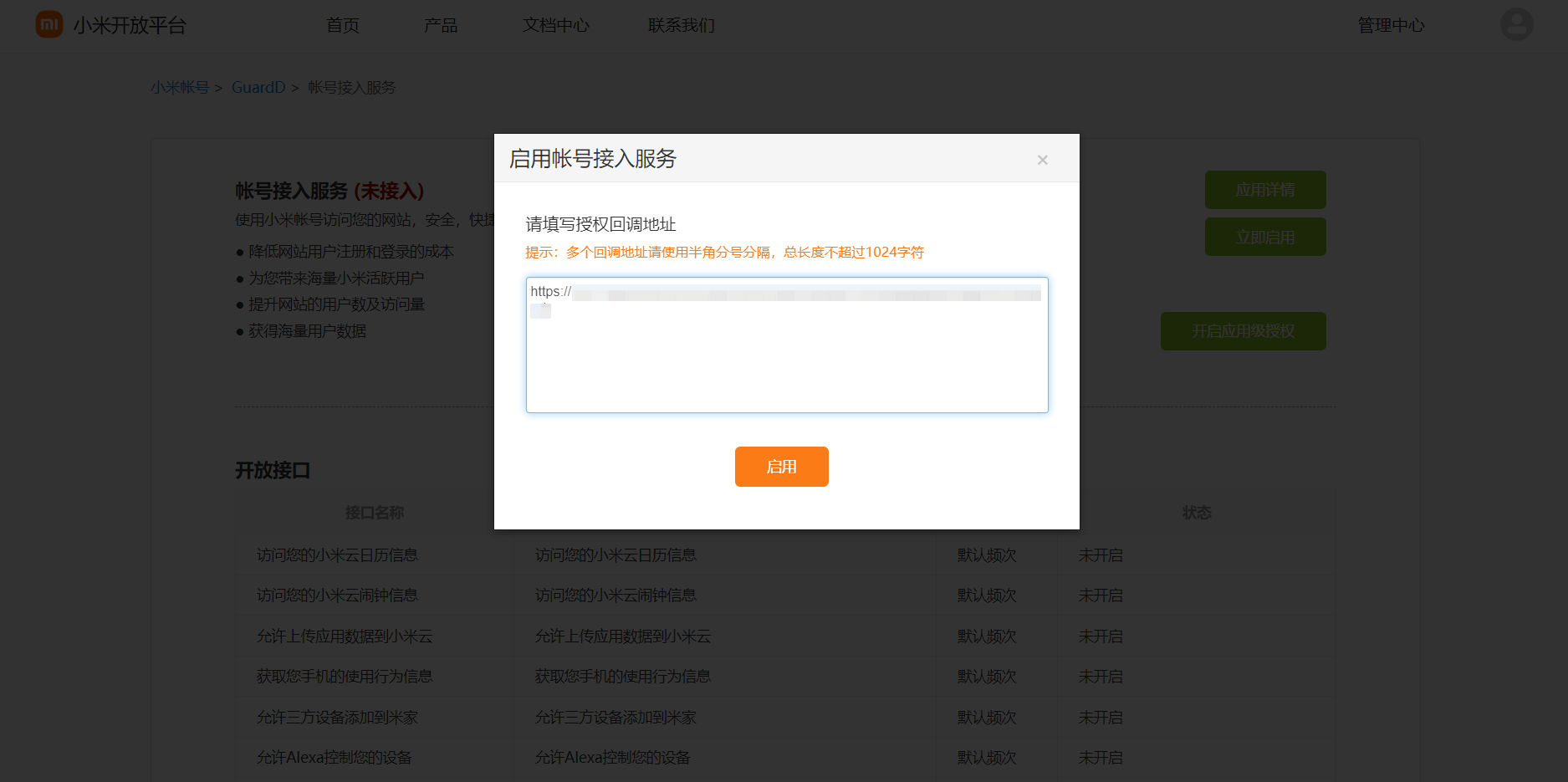
Connect the "Account Access Service" to the newly created application:
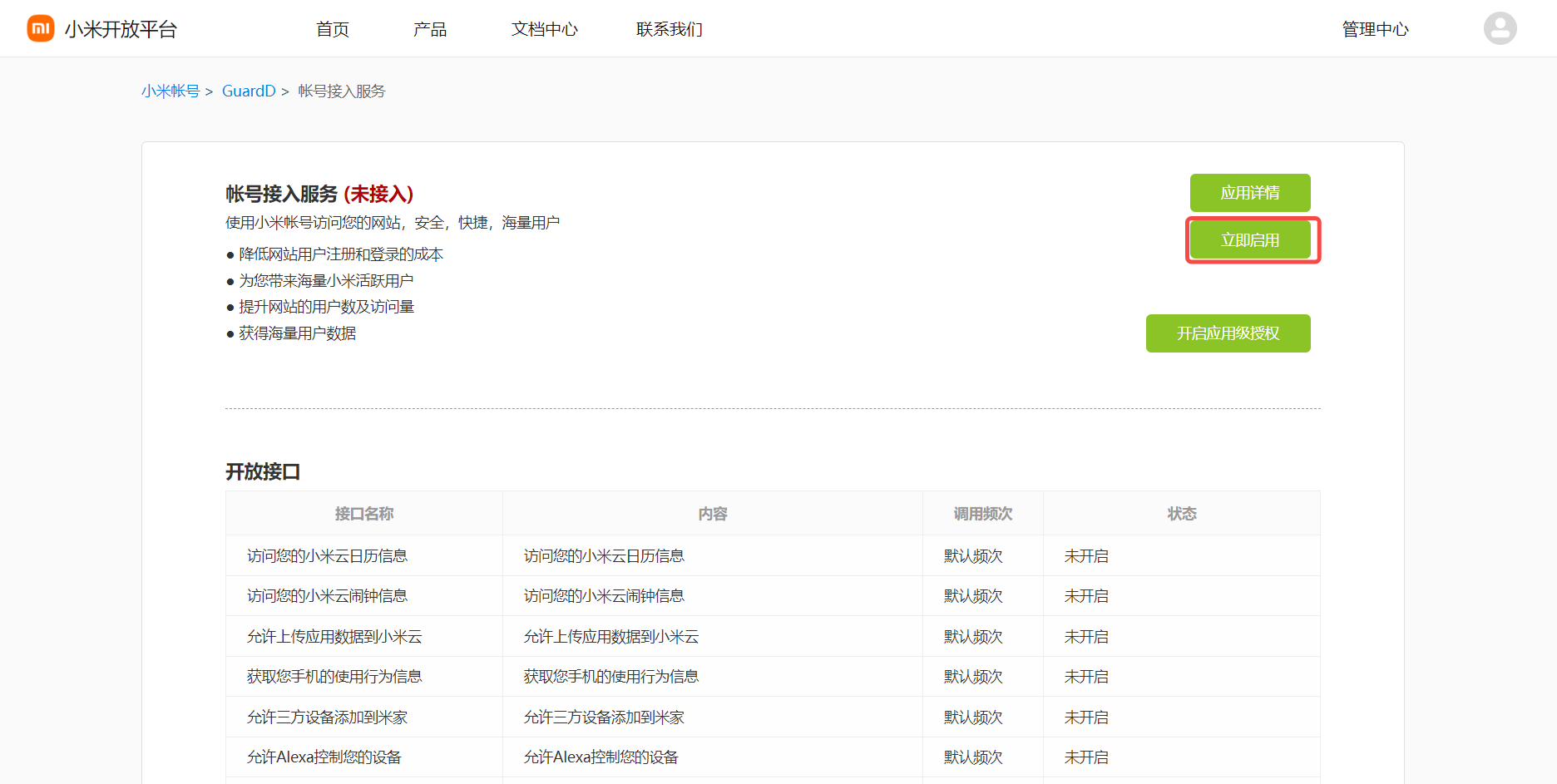
Configure the Application Callback Address in the pop-up window
- Application Callback Address: Fill in
https://core.genauth.ai/connection/social/{Unique Identifier}/{User Pool ID}/callback, you need to replace{Unique Identifier}with theUnique Identifierfilled in for the identity source you are creating in GenAuth, and{User Pool ID}with your User Pool ID
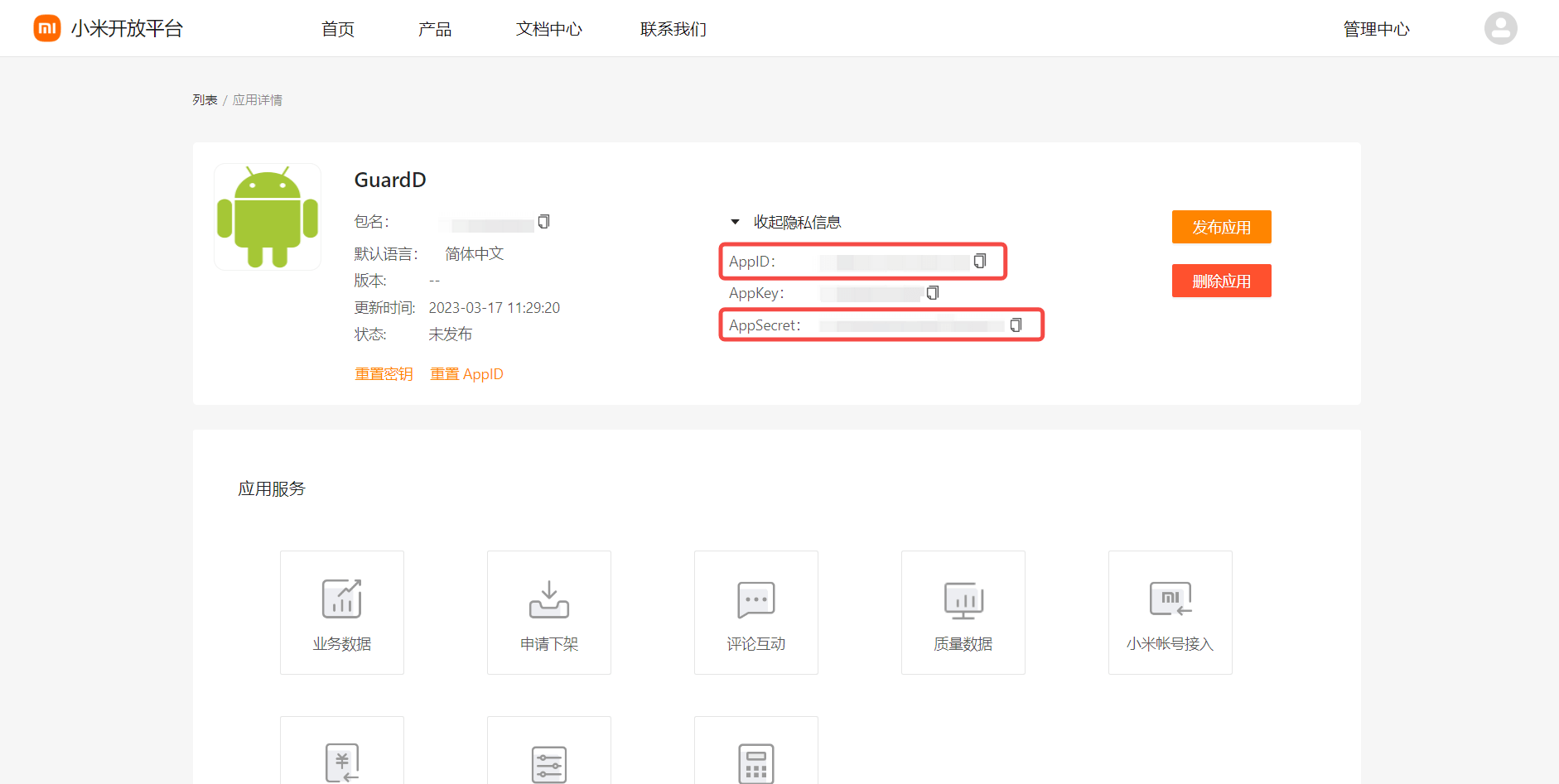
After the creation is complete, check the application details and record the AppID and AppSecret, which will be used in the next step. 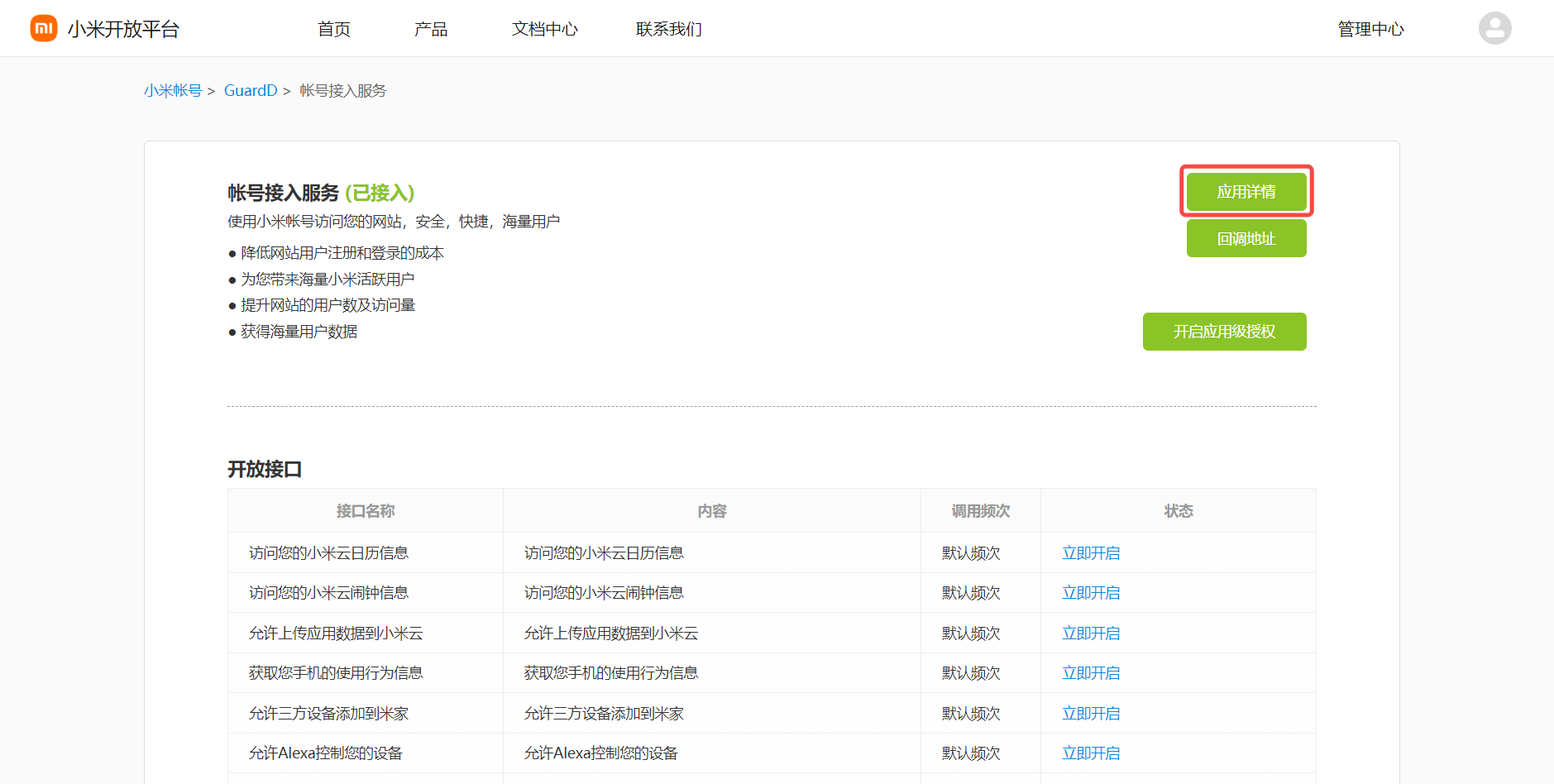
Step 2: Configure Xiaomi application configuration in the GenAuth console
2.1 Please click the "Create Social Identity Source" button on the "Social Identity Source" page of the GenAuth console to enter the "Select Social Identity Source" page.

2.2 Please go to the GenAuth console's "Social Identity Source" - "Select Social Identity Source" page, click the "Xiaomi" identity source button to enter the "Xiaomi Mobile Login Mode" page.
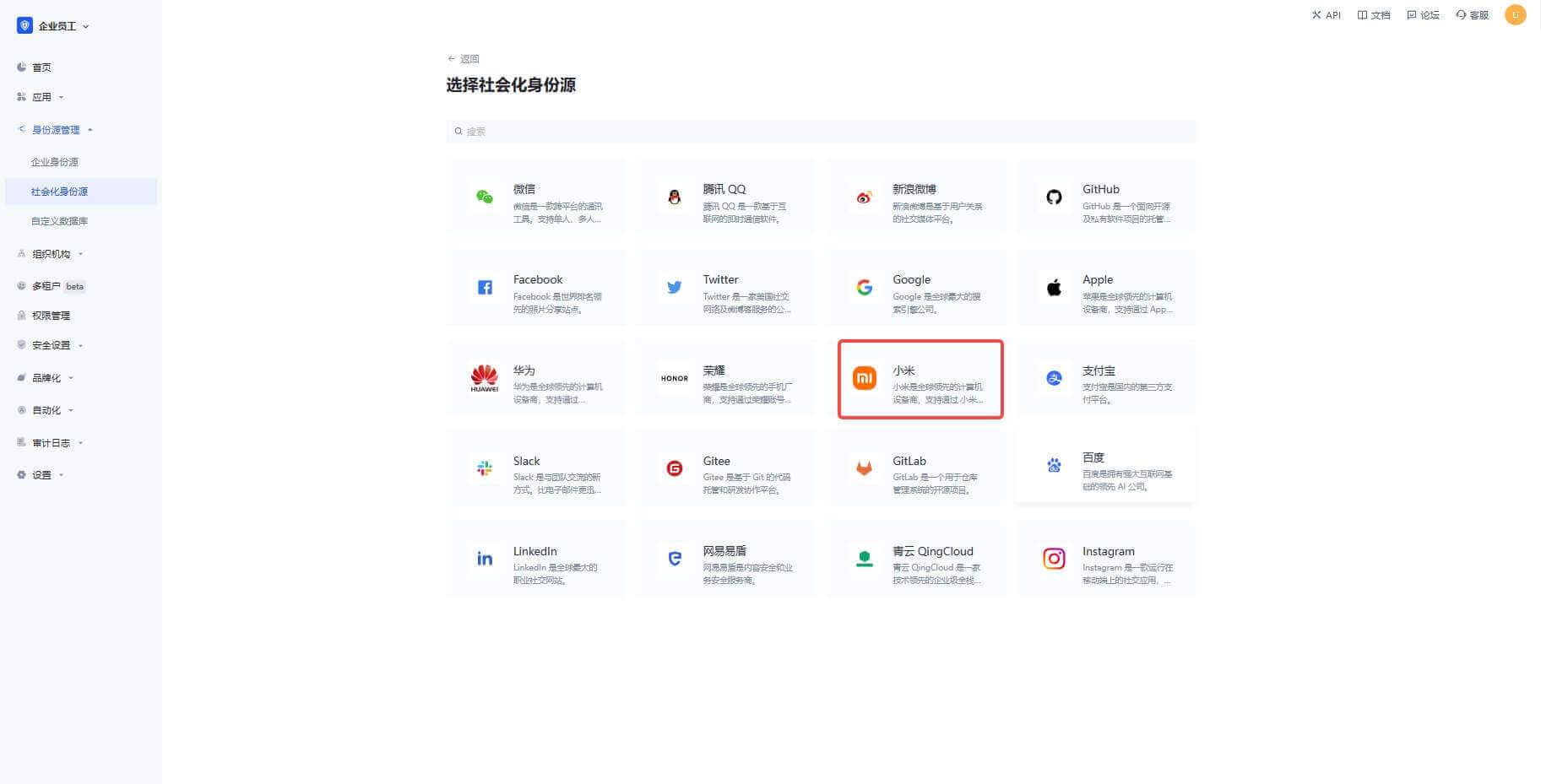
2.3 Please go to the GenAuth console's "Social Identity Source" - "Xiaomi Mobile" page to configure the relevant field information. 
| Field | Description |
|---|---|
| Unique ID | a. The unique ID consists of lowercase letters, numbers, and -, and its length is less than 32 bits. b. This is the unique ID of this connection and cannot be modified after setting. |
| Display Name | This name will be displayed on the button of the terminal user's login interface. |
| AppID | The Xiaomi application ID obtained in the previous step. |
| AppSecret | The Xiaomi application Secret obtained in the previous step. |
| Callback address | Xiaomi valid jump URI. This URL needs to be configured on the authorization callback page of the Xiaomi Open Platform mobile application. |
| Login mode | After turning on "Login only mode", you can only log in to existing accounts, and cannot create new accounts. Please choose carefully. |
2.4 After the configuration is completed, click the "Create" or "Save" button to complete the creation.
After creating the Xiaomi mobile identity source on the GenAuth console, you need to configure the callback address to the authorization callback address in the mobile application information on the Xiaomi Open Platform.
Step 3: Development access
Recommended development access method: SDK
Pros and cons description: Simple operation and maintenance, GenAuth is responsible for operation and maintenance. Each user pool has an independent secondary domain name; if you need to embed it in your application, you need to log in using the pop-up mode, that is, after clicking the login button, a window will pop up with the login page hosted by GenAuth, or redirect the browser to the login page hosted by GenAuth.
Detailed access method:
3.1 Create an application in the GenAuth console. For details, see How to create an application in GenAuth
3.2 On the created "Xiaomi Mobile" identity source connection details page, open and associate an application created in the GenAuth console

3.3 Experience Xiaomi third-party login on the login page (as shown in the [end user preview](#end user preview)).